
Thermodynamics in Mechanical Engineering: Concepts and Applications
Thermodynamics in Mechanical Engineering is one of the most important subjects for understanding how energy is transferred and converted in engineering systems. From automobile engines and power plants to refrigeration systems, gas turbines and renewable-energy technologies, thermodynamic principles are used to design, analyze and improve machines that convert energy into useful work.
For mechanical engineering students, thermodynamics is more than a theoretical subject. It provides the foundation for understanding how heat engines operate, how refrigerators remove heat, how turbines generate power and how energy efficiency can be improved in industrial systems.
As industries move toward energy-efficient manufacturing, electric mobility, sustainable power generation and advanced thermal systems, a strong understanding of thermodynamics continues to be valuable for aspiring mechanical engineers.
What Is Thermodynamics?
Thermodynamics is the branch of engineering science that deals with heat, work, energy and their transformations.
In mechanical engineering, thermodynamics helps engineers answer practical questions such as:
- How efficiently can an engine convert fuel energy into mechanical work?
- How much energy is lost during a process?
- How does a refrigerator transfer heat from a cold space to a warmer environment?
- How much power can a turbine produce?
- How can an industrial system reduce energy consumption?
By applying thermodynamic principles, engineers can analyze these systems and make them safer, more efficient and more economical.
Why Is Thermodynamics Important in Mechanical Engineering?
Mechanical engineers frequently work with machines and systems where energy conversion is involved.
Thermodynamics provides the fundamental knowledge required to understand:
- Internal combustion engines
- Steam turbines
- Gas turbines
- Boilers
- Compressors
- Pumps
- Refrigeration systems
- Air-conditioning systems
- Heat exchangers
- Power plants
- Industrial heating systems
- Renewable-energy systems
A mechanical engineer who understands thermodynamics can evaluate how energy enters a system, how it is transformed and where losses occur.
Basic Concepts of Thermodynamics
Understanding a few fundamental concepts makes the subject much easier for engineering students.
1. System and Surroundings
A system is the part of the physical world being studied, while everything outside it is considered the surroundings.
For example, when analyzing an engine cylinder, the gas inside the cylinder may be treated as the thermodynamic system.
2. Properties of a System
Thermodynamic properties describe the state of a system.
Common properties include:
- Pressure
- Temperature
- Volume
- Density
- Internal energy
- Enthalpy
- Entropy
These properties help engineers describe and analyze thermodynamic processes.
3. Heat
Heat is energy transferred between systems or surroundings because of a temperature difference.
Understanding heat transfer is essential when designing boilers, engines, heat exchangers, refrigeration equipment and many other engineering systems.
4. Work
Work is another important form of energy transfer.
For example, gas expanding inside an engine cylinder can perform work on a piston, producing mechanical motion.
5. Internal Energy
Internal energy represents the energy associated with the microscopic state of a system.
Changes in internal energy are important when analyzing heating, cooling, compression and expansion processes.
Laws of Thermodynamics
The laws of thermodynamics form the foundation of energy analysis.
Zeroth Law of Thermodynamics
The Zeroth Law establishes the concept of thermal equilibrium and provides the basis for temperature measurement.
If two systems are each in thermal equilibrium with a third system, they are also in thermal equilibrium with each other.
This principle is fundamental to the concept of temperature.
First Law of Thermodynamics
The First Law expresses the principle of conservation of energy.
Energy cannot simply disappear; it can be transferred or transformed from one form to another.
For a thermodynamic system, the energy balance considers factors such as heat supplied, work done and changes in internal energy.
This law is widely applied to engines, turbines, compressors, boilers and other engineering systems.
Second Law of Thermodynamics
The Second Law introduces the concept of direction and limitations of energy conversion.
It explains why heat naturally flows from a higher-temperature region toward a lower-temperature region and why no heat engine can convert all supplied heat into useful work.
The concept of entropy is closely associated with the Second Law.
Third Law of Thermodynamics
The Third Law describes the behaviour of systems as temperature approaches absolute zero and provides an important foundation for understanding entropy at very low temperatures.
Types of Thermodynamic Processes
Mechanical engineering students also study different processes through which a thermodynamic system changes state.
Isothermal Process
Temperature remains constant during the process.
Adiabatic Process
There is no heat transfer between the system and its surroundings.
Isobaric Process
Pressure remains constant.
Isochoric Process
Volume remains constant.
Polytropic Process
The process follows a relationship between pressure and volume that is useful in analyzing practical compression and expansion processes.
Understanding these processes helps students analyze real engineering equipment.
Applications of Thermodynamics in Mechanical Engineering
The practical applications of thermodynamics in mechanical engineering are extensive.
1. Automobile Engines
Thermodynamics is fundamental to the design and analysis of petrol and diesel engines.
Engine cycles help engineers understand how fuel energy is converted into mechanical work.
Thermodynamic analysis can help improve:
- Fuel efficiency
- Engine performance
- Power output
- Combustion efficiency
- Emissions performance
2. Power Plants
Thermal power plants use thermodynamic cycles to convert energy into electricity.
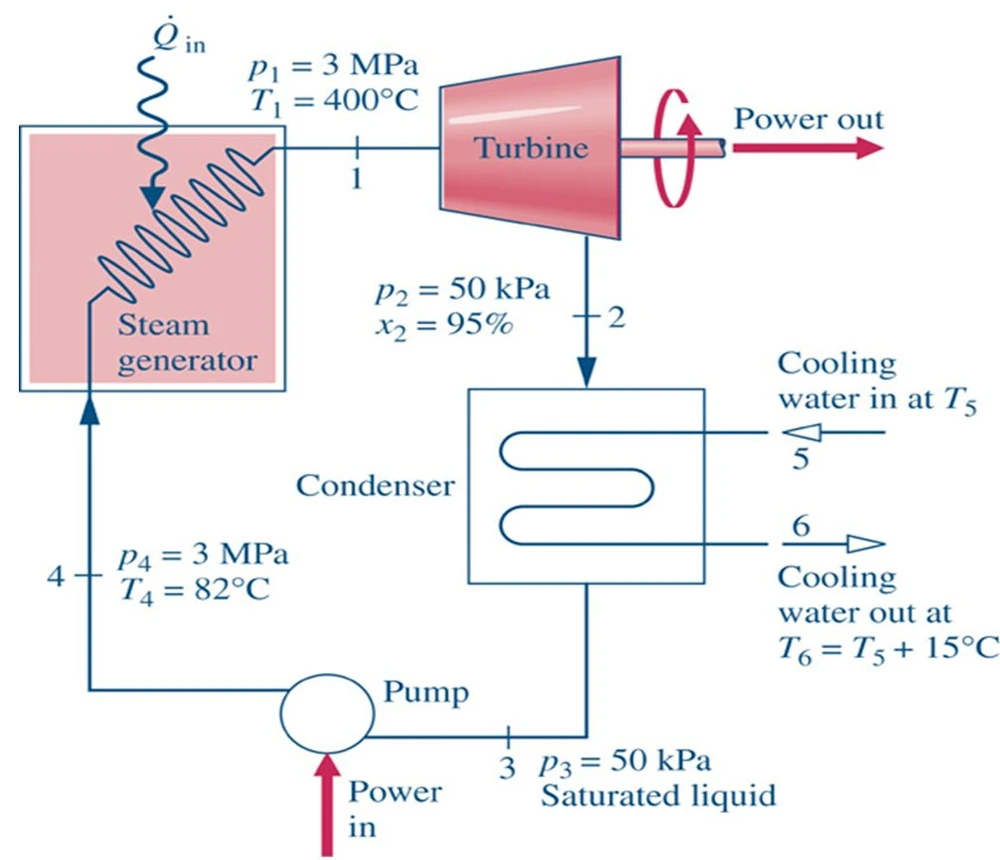
Engineers analyze systems involving boilers, turbines, condensers and pumps to understand energy conversion and improve efficiency.
The Rankine cycle is particularly important in steam power generation.
3. Gas Turbines
Gas turbines are used in aircraft propulsion and power generation.
The Brayton cycle provides an important theoretical foundation for understanding gas turbine operation.
Thermodynamic analysis helps engineers study compression, combustion, expansion and exhaust processes.
4. Refrigeration and Air Conditioning
Refrigerators and air-conditioning systems transfer heat from one location to another.
Thermodynamics helps engineers understand refrigeration cycles and select suitable components such as compressors, condensers, expansion devices and evaporators.
5. Heat Exchangers
Heat exchangers transfer thermal energy between fluids.
They are used extensively in:
- Power plants
- Chemical industries
- Automobile systems
- HVAC systems
- Manufacturing plants
- Process industries
Thermodynamic analysis helps engineers design efficient heat-transfer systems.
6. Boilers and Steam Systems
Boilers convert water into steam using thermal energy.
Thermodynamic principles help engineers calculate energy requirements, steam properties and system efficiency.
7. Renewable Energy
Thermodynamic concepts are also relevant to modern renewable-energy technologies.
Examples include:
- Solar thermal systems
- Geothermal energy
- Biomass energy
- Waste-heat recovery
- Energy storage systems
As industries focus increasingly on sustainable energy, thermodynamic analysis can help engineers improve the efficiency of energy systems.
Thermodynamics and Energy Efficiency
One of the most important roles of thermodynamics is helping engineers understand energy efficiency.
No practical energy conversion system is perfectly efficient. Energy losses can occur because of friction, heat transfer, pressure drops and other irreversible processes.
Engineers therefore study thermodynamic performance to identify where improvements can be made.
Improving efficiency can help industries:
- Reduce fuel consumption
- Lower operating costs
- Reduce energy waste
- Improve equipment performance
- Reduce environmental impact
This makes thermodynamics particularly relevant to modern engineering challenges.
Thermodynamics and Mechanical Engineering Design
Thermodynamics is not studied only for examinations. Engineers use thermodynamic concepts during the design and analysis of real systems.
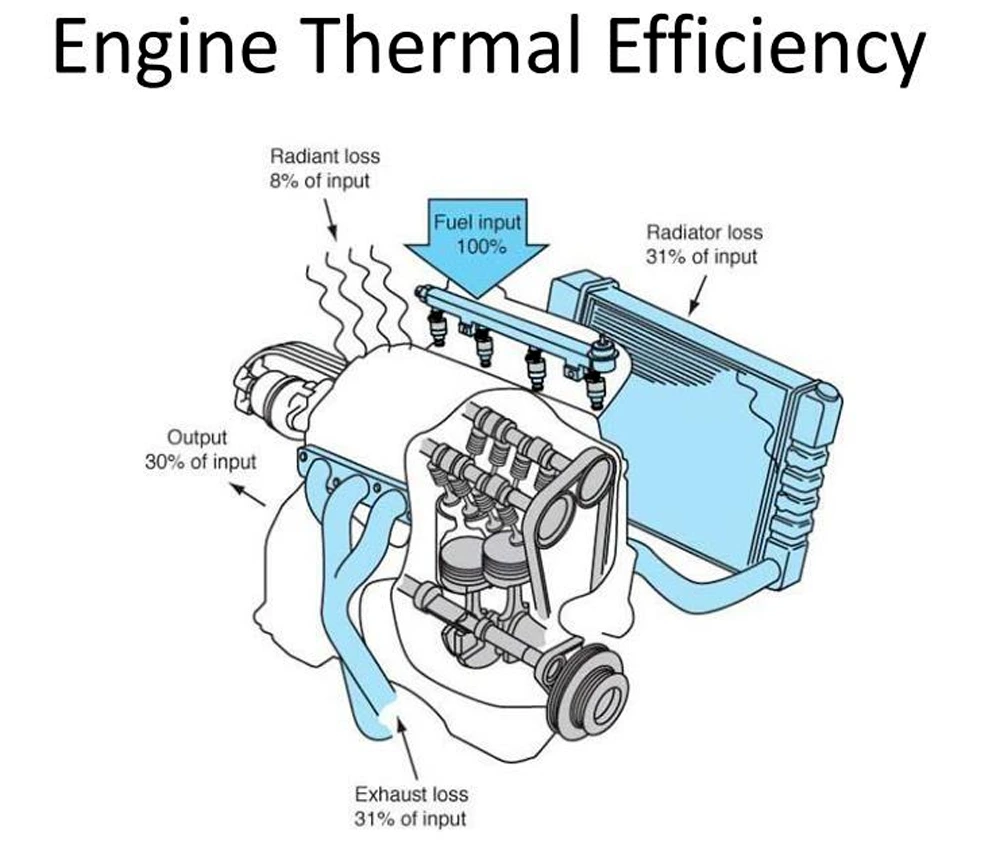
For example, while developing an engine, engineers may need to consider:
- Energy input.
- Combustion or heat addition.
- Expansion and work production.
- Heat losses.
- Exhaust energy.
- Overall efficiency.
Similarly, engineers designing a refrigeration system must understand how refrigerant properties change during compression, condensation, expansion and evaporation.
Benefits of Learning Thermodynamics for Mechanical Engineering Students
A strong understanding of thermodynamics in mechanical engineering can help students develop several important engineering skills.
Analytical Thinking
Students learn to break complex systems into manageable processes and energy balances.
Problem-Solving
Thermodynamic problems require students to apply equations, assumptions and physical principles.
Engineering Design Skills
Understanding energy conversion helps students design and evaluate machines and thermal systems.
Industrial Awareness
Thermodynamics connects classroom concepts with engines, turbines, boilers, compressors and refrigeration equipment used in industry.
Career Preparation
Knowledge of thermodynamics is useful in areas such as:
- Automobile engineering
- Power generation
- HVAC
- Manufacturing
- Energy engineering
- Aerospace
- Process industries
- Renewable energy
How Mechanical Engineering Students Can Learn Thermodynamics Effectively
Students often find thermodynamics challenging because it combines concepts, mathematics and engineering applications.
A practical learning approach is to:
Start With Fundamental Concepts
Understand temperature, pressure, volume, heat, work and energy before moving to complex cycles.
Understand the Laws
Focus on the physical meaning of each law instead of memorizing equations alone.
Practice Numerical Problems
Regular problem-solving improves confidence and helps students understand how equations are applied.
Study Engineering Cycles
Learn cycles such as:
- Otto cycle
- Diesel cycle
- Dual cycle
- Rankine cycle
- Brayton cycle
- Refrigeration cycles
Connect Theory With Machines
Whenever possible, relate classroom concepts to actual engines, turbines, compressors, boilers and refrigeration systems.
Role of Practical Learning
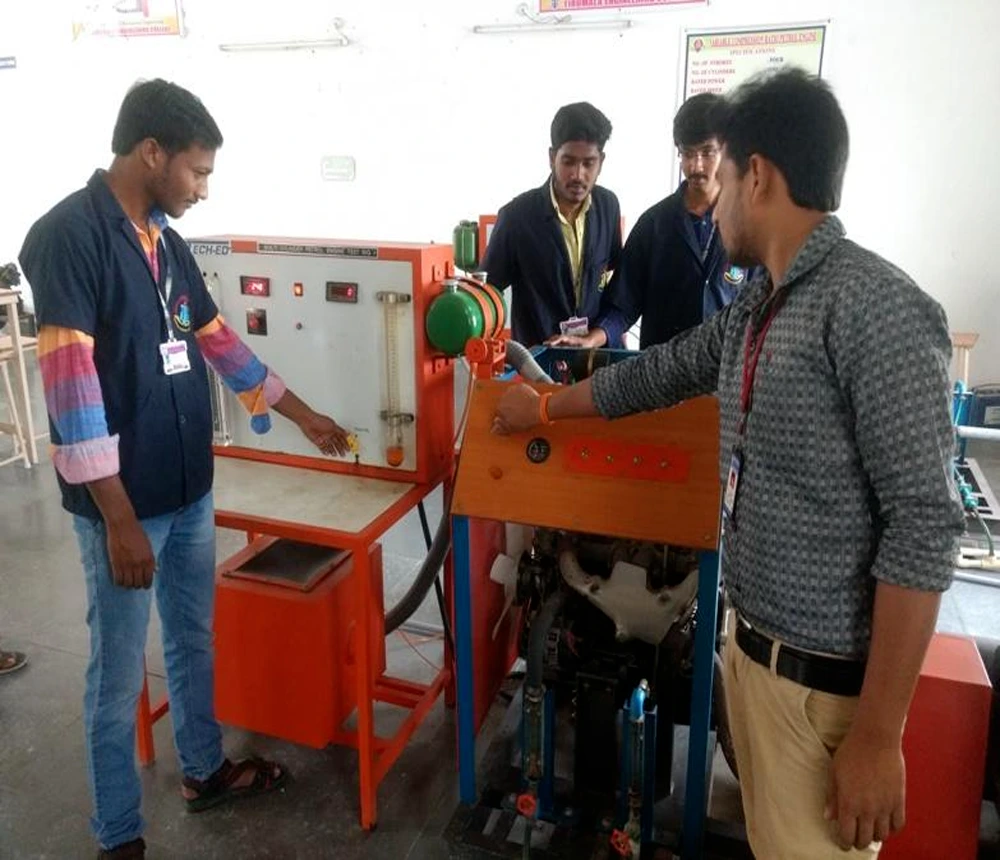
Laboratory experience can make thermodynamics much easier to understand.
Mechanical engineering laboratories may expose students to equipment and experiments involving:
- Heat transfer
- Engine performance
- Refrigeration
- Air conditioning
- Boilers
- Turbines
- Thermal efficiency
Practical demonstrations help students connect theoretical calculations with real engineering behaviour.
Frequently Asked Questions
What is thermodynamics in mechanical engineering?
Thermodynamics in Mechanical Engineering is the study of heat, work, energy and energy conversion in engineering systems such as engines, turbines, refrigeration systems and power plants.
Why is thermodynamics important for mechanical engineers?
Thermodynamics helps mechanical engineers understand and design systems that involve energy conversion, including engines, turbines, boilers, compressors, refrigeration systems and power plants.
What are the four laws of thermodynamics?
The four laws are the Zeroth, First, Second and Third Laws of Thermodynamics. Together, they establish fundamental principles related to thermal equilibrium, energy conservation, energy conversion and entropy.
What are the main applications of thermodynamics?
Major applications include automobile engines, power plants, gas turbines, refrigeration and air conditioning, boilers, heat exchangers, compressors and renewable-energy systems.
What are thermodynamic cycles?
Thermodynamic cycles are sequences of processes through which a working substance returns to its initial state. Examples include the Otto, Diesel, Rankine, Brayton and refrigeration cycles.
Is thermodynamics difficult for mechanical engineering students?
Thermodynamics can initially seem challenging because it combines physics, mathematics and engineering applications. Building strong fundamentals and regularly solving practical problems can make the subject much easier.
What careers use thermodynamics?
Thermodynamic knowledge is useful in automobile engineering, power generation, HVAC, aerospace, manufacturing, energy engineering, process industries and renewable-energy technologies.
How can students learn thermodynamics effectively?
Students can improve their understanding by learning fundamental concepts first, understanding the physical meaning of thermodynamic laws, practicing numerical problems, studying thermodynamic cycles and connecting theory with laboratory experiments.
Conclusion
Thermodynamics in Mechanical Engineering provides the scientific foundation for understanding how energy moves and changes form in machines and engineering systems. From the internal combustion engine in an automobile to turbines in power plants and refrigeration systems in buildings, thermodynamic principles are present throughout modern engineering.
For mechanical engineering students, learning thermodynamics develops more than theoretical knowledge. It builds analytical thinking, problem-solving ability and an understanding of energy efficiency—skills that remain important across many engineering industries.
As the engineering sector moves toward energy-efficient machines, sustainable technologies, advanced manufacturing and cleaner energy systems, thermodynamics will continue to be an important area of mechanical engineering education.
For students considering a career in Mechanical Engineering, developing a strong foundation in thermodynamics can provide valuable preparation for both higher studies and industry-oriented engineering careers.
Educational note: This article is intended for engineering education and general informational purposes.