
Web Performance & Core Web Vitals Optimization: Improve Website Speed, SEO, and User Experience
In today’s digital world, website visitors expect pages to load instantly. A delay of even a few seconds can lead to higher bounce rates, lower user engagement, and reduced search engine rankings. This is why Web Performance & Core Web Vitals Optimization has become one of the most important aspects of modern web development and technical SEO.
Google uses Core Web Vitals as ranking signals to measure real-world user experience. Whether you are a web developer, engineering student, digital marketer, or business owner, understanding Web Performance & Core Web Vitals Optimization is essential for building fast, reliable, and user-friendly websites.
For students pursuing Computer Science and Information Technology, learning these optimization techniques provides valuable industry skills that are widely used in professional web development.
What is Web Performance & Core Web Vitals Optimization?
Web Performance & Core Web Vitals Optimization refers to the process of improving a website’s loading speed, responsiveness, and visual stability. It combines front-end optimization techniques with performance monitoring tools to ensure users enjoy a smooth browsing experience.
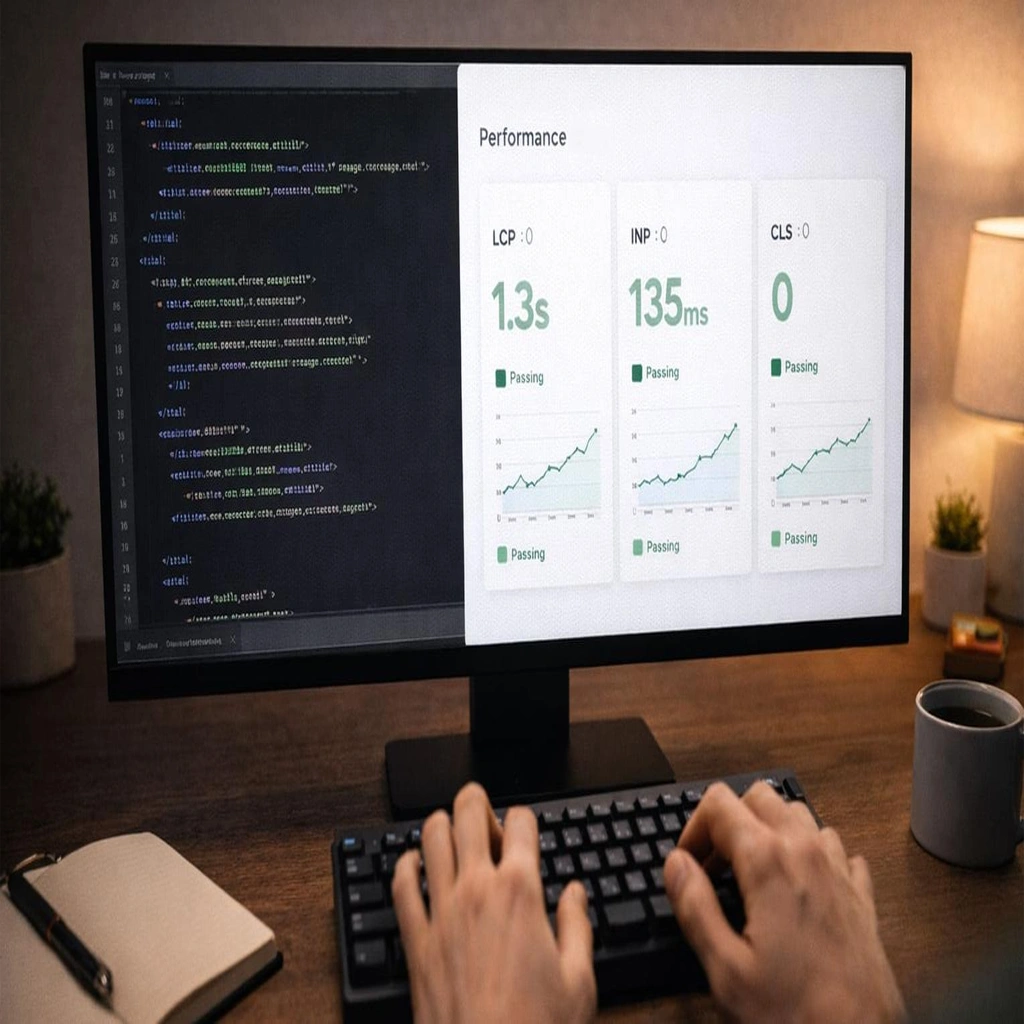
Google introduced Core Web Vitals to evaluate three key aspects of user experience:
- Largest Contentful Paint (LCP) – Measures loading performance.
- Interaction to Next Paint (INP) – Measures responsiveness to user interactions.
- Cumulative Layout Shift (CLS) – Measures visual stability by detecting unexpected page movement.
Optimizing these metrics improves both user satisfaction and search engine visibility.
Why is Core Web Vitals Important?
Improving Web Performance & Core Web Vitals Optimization offers numerous benefits:
- Faster website loading
- Better Google search rankings
- Improved user experience
- Lower bounce rate
- Higher conversion rates
- Better mobile performance
- Improved accessibility
- Enhanced customer satisfaction
- Increased website credibility
For educational institutions such as Ideal Institute of Engineering (IIE Kalyani), a fast and responsive website helps prospective students access admission information, course details, and placement updates without delays.
The Three Core Web Vitals Explained
1. Largest Contentful Paint (LCP)
LCP measures how quickly the largest visible content (such as a banner image or heading) loads.
Good Score: Less than 2.5 seconds
How to Improve LCP
- Compress images
- Use modern image formats like WebP
- Enable browser caching
- Minify CSS and JavaScript
- Use a Content Delivery Network (CDN)
- Upgrade server performance
2. Interaction to Next Paint (INP)
INP measures how quickly a website responds when users click, tap, or type.
Good Score: Less than 200 milliseconds
Improve INP by
- Reducing JavaScript execution time
- Avoiding heavy third-party scripts
- Splitting large JavaScript bundles
- Using lazy loading
- Optimizing event listeners
3. Cumulative Layout Shift (CLS)
CLS measures unexpected movement of page elements while loading.
Good Score: Less than 0.1
Improve CLS by
- Defining image dimensions
- Reserving space for advertisements
- Loading fonts efficiently
- Avoiding dynamic content insertion above existing content
Best Practices for Website Performance Optimization
To achieve excellent Web Performance & Core Web Vitals Optimization, developers should follow these best practices:
Image Optimization
- Compress images before uploading.
- Use responsive images.
- Convert PNG and JPEG files to WebP or AVIF.
- Enable lazy loading.
CSS Optimization
- Remove unused CSS.
- Minify CSS files.
- Combine stylesheets where appropriate.
- Load critical CSS first.
JavaScript Optimization
- Minify JavaScript.
- Defer non-essential scripts.
- Remove unused libraries.
- Reduce third-party plugins.
Server Optimization
- Use SSD hosting.
- Enable GZIP or Brotli compression.
- Use HTTP/2 or HTTP/3.
- Optimize database queries.
- Implement server-side caching.
Mobile Optimization
Since Google uses mobile-first indexing:
- Create responsive layouts.
- Optimize touch interactions.
- Reduce unnecessary animations.
- Improve font readability.
Tools for Measuring Core Web Vitals
Several industry-standard tools help evaluate website performance:
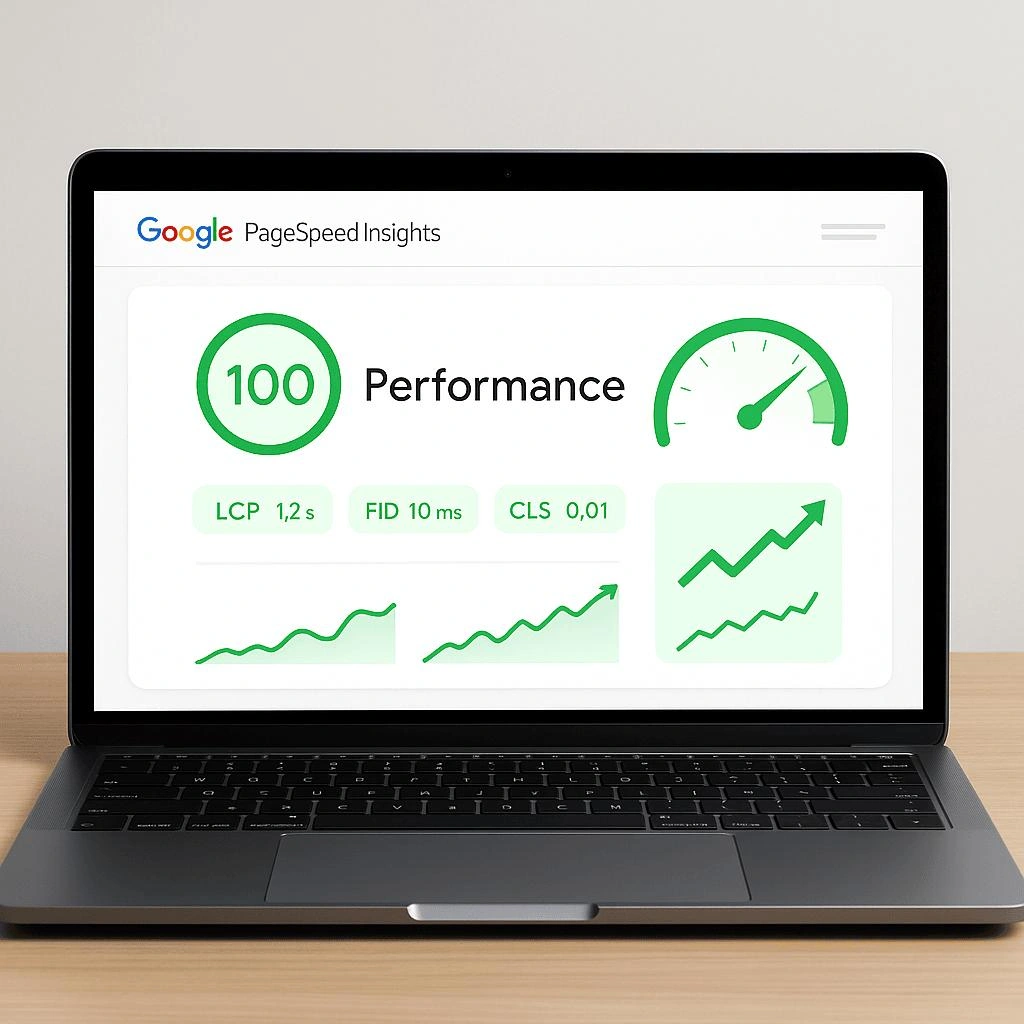
- Google PageSpeed Insights
- Google Lighthouse
- Chrome DevTools
- Google Search Console (Core Web Vitals Report)
- GTmetrix
- WebPageTest
These tools provide actionable recommendations to improve performance scores.
Benefits of Learning Core Web Vitals
Students studying Computer Science, Information Technology, and Software Engineering gain valuable skills by understanding Web Performance & Core Web Vitals Optimization.
Career opportunities include:
- Front-End Developer
- Full Stack Developer
- UI/UX Engineer
- Technical SEO Specialist
- Web Performance Engineer
- Software Engineer
- Digital Marketing Analyst
These skills are highly valued by technology companies and startups worldwide.
Web Performance in Engineering Education
At Ideal Institute of Engineering (IIE Kalyani), students are encouraged to learn modern web technologies, responsive web design, cloud computing, software engineering, and performance optimization. Understanding Web Performance & Core Web Vitals Optimization prepares future engineers to build scalable, high-performing web applications that meet current industry standards.
Practical exposure to HTML5, CSS3, JavaScript, React, PHP, databases, and cloud platforms helps students develop real-world technical expertise.
Conclusion
Web Performance & Core Web Vitals Optimization is no longer optional—it is a critical component of successful website development and technical SEO. Faster websites improve user satisfaction, enhance search engine rankings, and increase engagement across all devices.
For aspiring engineers and web developers, mastering Core Web Vitals provides a competitive advantage in today’s technology-driven job market. By following optimization best practices and continuously monitoring performance metrics, developers can create websites that are both fast and user-friendly.