
Structured Data, Knowledge Graphs & Semantic Web Engineering
The internet has evolved from a collection of linked web pages into a vast network of interconnected knowledge. Today, search engines no longer rely solely on keywords—they interpret the meaning, relationships, and context behind information. This transformation is driven by Structured Data, Knowledge Graphs & Semantic Web Engineering, a field that combines web technologies, data modeling, artificial intelligence, and information retrieval to create smarter and more meaningful digital experiences.
Whether you are a software developer, data engineer, SEO specialist, or engineering student, understanding Structured Data, Knowledge Graphs & Semantic Web Engineering is essential for building websites and applications that are easier for both users and search engines to understand.
What is Structured Data?
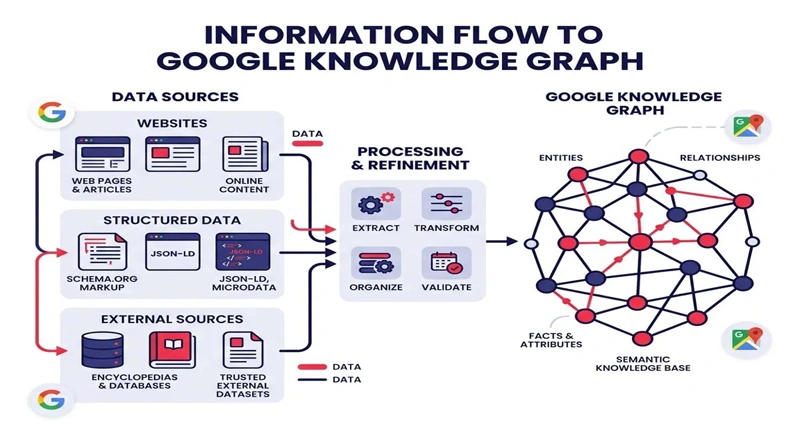
Structured Data is a standardized format used to describe the content of a web page so that search engines can interpret it accurately. Instead of relying only on visible text, structured data provides machine-readable information about entities such as articles, events, organizations, courses, products, people, and FAQs.
The most widely used format is JSON-LD, which is recommended by Google because it is easy to implement and maintain.
For example, a college website can use structured data to describe:
- Academic courses
- Faculty members
- Campus locations
- Admission events
- News articles
- Frequently Asked Questions (FAQs)
This additional context helps search engines display rich results and improves content discoverability.
Understanding Knowledge Graphs
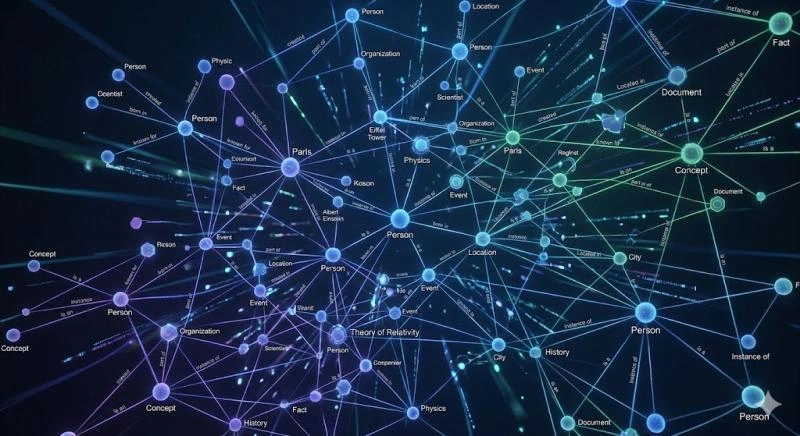
A Knowledge Graph is a network of interconnected entities and their relationships. Instead of storing isolated pieces of information, a knowledge graph connects people, places, organizations, concepts, and events, allowing search engines and AI systems to understand context rather than just keywords.
For example:
- Ideal Institute of Engineering → offers → Computer Science Engineering
- Computer Science Engineering → includes → Artificial Intelligence
- Artificial Intelligence → uses → Machine Learning
These relationships enable search engines to answer complex queries more accurately and provide users with richer search experiences.
What is Semantic Web Engineering?
Semantic Web Engineering is the practice of designing web systems where information has clearly defined meaning, enabling computers to process, integrate, and reason about data more intelligently.
It builds on standards such as:
- RDF (Resource Description Framework)
- OWL (Web Ontology Language)
- SPARQL Query Language
- JSON-LD
- Schema.org vocabulary
The goal is to create a web where machines understand relationships between data rather than simply indexing text.
Why are Structured Data and Knowledge Graphs Important?
Implementing Structured Data, Knowledge Graphs & Semantic Web Engineering provides several advantages:
- Improves search engine understanding.
- Enables rich search results.
- Supports AI-powered search experiences.
- Enhances voice search compatibility.
- Improves website visibility.
- Strengthens entity recognition.
- Increases click-through rates (CTR).
- Helps build authoritative digital identities.
- Supports knowledge panels in search engines.
For educational institutions, these technologies make course information, faculty profiles, research activities, and campus details more accessible to prospective students.
Types of Structured Data
Some commonly used schema types include:
Article Schema
Used for blogs, research publications, and news articles.
FAQ Schema
Displays frequently asked questions directly in search results.
Organization Schema
Provides information about institutions, companies, and educational organizations.
Course Schema
Ideal for engineering colleges offering degree and certification programs.
Person Schema
Describes faculty members, researchers, and administrators.
Event Schema
Highlights seminars, workshops, admissions, and campus events.
Breadcrumb Schema
Improves navigation and search result presentation.
How Knowledge Graphs Work
Knowledge graphs typically follow these steps:
- Entity Identification – Detect people, places, organizations, and concepts.
- Relationship Mapping – Connect entities using meaningful relationships.
- Semantic Classification – Categorize data using ontologies.
- Storage – Store information in graph databases.
- Query Processing – Retrieve interconnected information efficiently.
This graph-based approach supports advanced search, recommendation systems, and AI applications.
Applications of Semantic Web Engineering
Modern organizations use Structured Data, Knowledge Graphs & Semantic Web Engineering in:
- Search engines
- Digital libraries
- Healthcare information systems
- Educational portals
- E-commerce platforms
- Smart assistants
- Recommendation engines
- Enterprise knowledge management
- Research databases
These technologies enable intelligent data discovery and improved decision-making.
Best Practices for Implementation
To implement structured data effectively:
- Use Schema.org vocabulary.
- Prefer JSON-LD format.
- Validate markup using Google’s Rich Results Test.
- Keep structured data consistent with visible content.
- Use canonical URLs.
- Maintain accurate entity information.
- Update schema whenever content changes.
- Monitor enhancements through Google Search Console.
These practices improve data quality and maximize eligibility for rich search features.
Career Opportunities
Expertise in Structured Data, Knowledge Graphs & Semantic Web Engineering opens doors to careers such as:
- Software Engineer
- Full Stack Developer
- Data Engineer
- Knowledge Engineer
- Machine Learning Engineer
- AI Developer
- Technical SEO Specialist
- Information Architect
- Semantic Web Researcher
As AI-driven search and intelligent systems continue to evolve, demand for professionals with semantic web skills is expected to grow significantly.
Learning Semantic Web Technologies at Ideal Institute of Engineering (IIE Kalyani)
Students at Ideal Institute of Engineering (IIE Kalyani) are introduced to modern computing concepts through programs in Computer Science, Information Technology, Artificial Intelligence, Data Science, and Software Engineering. Topics such as web technologies, databases, cloud computing, machine learning, and semantic data modeling provide a strong foundation for understanding Structured Data, Knowledge Graphs & Semantic Web Engineering.
By combining theoretical learning with practical projects, students gain the skills required to design intelligent web applications that support modern search engines, AI systems, and linked data ecosystems.
Conclusion
Structured Data, Knowledge Graphs & Semantic Web Engineering represent the future of the web. By transforming isolated information into connected knowledge, these technologies improve search visibility, enhance AI understanding, and create richer digital experiences.
For engineering students, mastering these concepts provides valuable expertise in web development, information retrieval, data engineering, and artificial intelligence. As semantic technologies become increasingly important across industries, professionals with these skills will play a key role in shaping the next generation of intelligent web applications.