
Programmatic SEO & Large-Scale Data Automation
As websites continue to grow, manually creating thousands of optimized pages is no longer practical. Modern organizations rely on Programmatic SEO & Large-Scale Data Automation to generate high-quality, search-friendly content at scale while maintaining consistency, accuracy, and performance. This approach combines databases, automation, software development, and technical SEO to create websites capable of serving millions of pages efficiently.
From e-commerce marketplaces and travel portals to educational institutions and job listing platforms, programmatic SEO has transformed the way websites expand their search visibility. For engineering students and aspiring software developers, learning Programmatic SEO & Large-Scale Data Automation provides valuable insight into how modern web platforms use automation to solve large-scale content and indexing challenges.
What is Programmatic SEO?
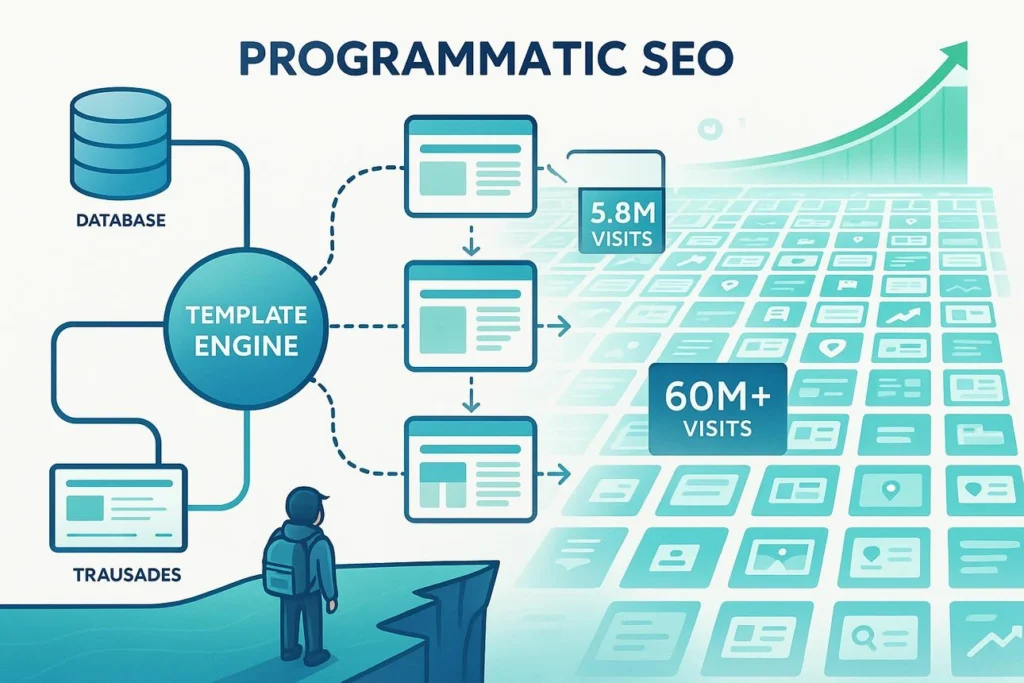
Programmatic SEO is the process of generating large numbers of optimized web pages automatically using structured data, templates, and automation. Instead of writing each page manually, developers build reusable page templates that pull information from databases, APIs, or spreadsheets.
For example, an engineering college website could automatically generate dedicated pages for:
- Academic departments
- Engineering courses
- Faculty profiles
- Research laboratories
- Placement statistics
- Student achievements
- Campus facilities
- Admission information
Each page is created dynamically while remaining optimized for search engines and users.
What is Large-Scale Data Automation?
Large-Scale Data Automation refers to the automated collection, processing, transformation, validation, and publishing of structured information across digital platforms. It reduces repetitive manual work and ensures that large datasets remain consistent and up to date.
Automation pipelines often integrate:
- Databases
- APIs
- Content Management Systems (CMS)
- AI-assisted content generation
- ETL (Extract, Transform, Load) workflows
- Scheduling and monitoring tools
Together, these systems enable organizations to publish and maintain thousands of pages with minimal manual intervention.
Why is Programmatic SEO Important?
Implementing Programmatic SEO & Large-Scale Data Automation offers several advantages:
- Scales content production efficiently.
- Improves search engine visibility.
- Reduces manual content creation.
- Maintains consistent page structure.
- Accelerates website growth.
- Supports long-tail keyword targeting.
- Enhances user experience with structured information.
- Simplifies content updates through centralized data.
Educational institutions can use this approach to manage extensive academic information while ensuring prospective students always access accurate and current content.
Key Components of Programmatic SEO
A successful programmatic SEO strategy includes several technical components:
Structured Database
Stores reliable information that feeds automatically into page templates.
Dynamic Templates
Reusable layouts generate pages using data from the database without duplicating design work.
Keyword Mapping
Each generated page targets a specific search intent and keyword cluster.
Internal Linking
Automatically connects related pages to improve navigation and crawlability.
Schema Markup
Adds structured data such as Organization, Course, FAQ, and Breadcrumb schemas to enhance search visibility.
XML Sitemaps
Ensure search engines can efficiently discover newly generated pages.
Workflow for Large-Scale Data Automation
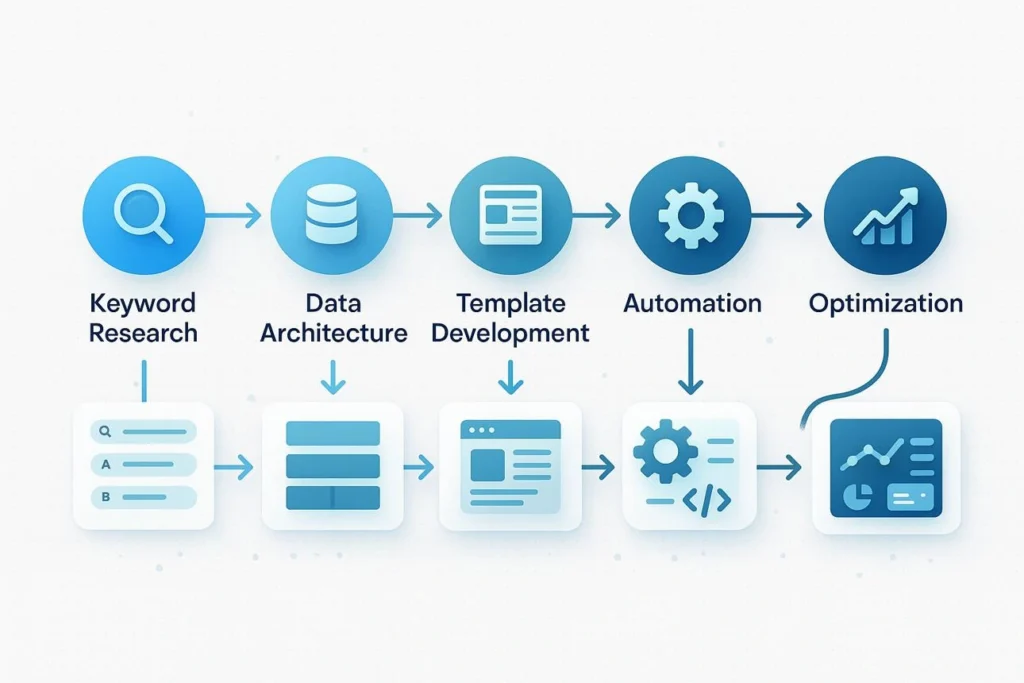
A typical automation workflow includes:
- Collect data from trusted sources.
- Validate and clean the data.
- Store information in a centralized database.
- Generate SEO-friendly URLs.
- Populate page templates with structured content.
- Publish pages automatically.
- Update XML sitemaps.
- Monitor indexing and performance through analytics.
This automated pipeline reduces errors while keeping content synchronized across the website.
Best Practices for Programmatic SEO
To maximize results:
- Use unique, high-quality content on every page.
- Avoid thin or duplicate content.
- Optimize title tags and meta descriptions dynamically.
- Include descriptive headings and internal links.
- Add structured data using JSON-LD.
- Monitor crawl errors in Google Search Console.
- Regularly update datasets and templates.
- Measure user engagement and refine pages continuously.
Automation should enhance quality—not replace it.
Common Challenges
Although powerful, Programmatic SEO & Large-Scale Data Automation requires careful planning. Common challenges include:
- Duplicate content
- Low-quality automatically generated pages
- Inaccurate datasets
- Poor internal linking
- Excessive crawl budget consumption
- Slow indexing of new pages
- Maintaining data freshness
Strong validation rules and editorial oversight help mitigate these issues.
Tools and Technologies
Developers often use the following technologies:
- MySQL or PostgreSQL
- Python
- PHP
- Node.js
- React and Next.js
- Google Search Console
- Google Analytics
- Screaming Frog SEO Spider
- Apache Airflow
- n8n
- GitHub Actions
- Cloud platforms such as AWS or Google Cloud
These tools support automation, monitoring, and continuous deployment of large-scale SEO projects.
Career Opportunities
Skills in Programmatic SEO & Large-Scale Data Automation are increasingly valuable for careers such as:
- Software Engineer
- Full Stack Developer
- Technical SEO Specialist
- Data Engineer
- Web Application Developer
- Cloud Engineer
- Digital Marketing Technologist
- Automation Engineer
- AI Workflow Developer
As organizations rely more heavily on automation and data-driven strategies, professionals with these skills are in high demand.
Learning Programmatic SEO at Ideal Institute of Engineering (IIE Kalyani)
Students at Ideal Institute of Engineering (IIE Kalyani) gain practical experience in software engineering, databases, web technologies, cloud computing, artificial intelligence, and automation. Learning Programmatic SEO & Large-Scale Data Automation helps students understand how scalable digital platforms are built and maintained using modern engineering practices.
By working on real-world projects involving APIs, databases, automation workflows, and technical SEO, students develop industry-ready skills that prepare them for careers in software development, digital platforms, and intelligent web systems.
Conclusion
Programmatic SEO & Large-Scale Data Automation enables organizations to scale high-quality content efficiently while improving search visibility, operational efficiency, and user experience. By combining structured data, automation workflows, modern development frameworks, and technical SEO best practices, developers can build websites capable of serving thousands—or even millions—of optimized pages.
For engineering students, mastering these concepts bridges software engineering, databases, cloud technologies, and digital marketing, creating a strong foundation for future careers in web development, automation, and AI-powered applications.