
Rendering Architectures: SSR, SSG, Hydration & Dynamic Rendering
Modern web applications are expected to be fast, interactive, and optimized for search engines. As websites become more dynamic, developers need rendering strategies that balance performance, scalability, and user experience. This is where Rendering Architectures: SSR, SSG, Hydration & Dynamic Rendering play a crucial role.
Whether you are building an e-commerce platform, an educational portal, a corporate website, or a SaaS application, choosing the right rendering architecture directly impacts loading speed, SEO performance, scalability, and user satisfaction.
For engineering students and aspiring software developers, understanding these rendering techniques is an essential part of modern web development.
What are Rendering Architectures?
Rendering architecture refers to the method used to generate and display web pages in a browser. Instead of relying on a single rendering strategy, modern frameworks such as Next.js, Nuxt, Angular Universal, and Astro provide multiple rendering options depending on application requirements.
The four most widely used rendering approaches are:
- Server-Side Rendering (SSR)
- Static Site Generation (SSG)
- Hydration
- Dynamic Rendering
Each technique offers different advantages and is suited for different types of web applications.
Why are Modern Rendering Architectures Important?
Using the right rendering strategy helps developers achieve:
- Faster page loading
- Better Google rankings
- Improved Core Web Vitals
- Enhanced user experience
- Lower bounce rates
- Better accessibility
- Efficient server utilization
- Scalable web applications
Search engines prefer websites that load quickly and provide meaningful content immediately. Modern rendering architectures help achieve these goals.
Server-Side Rendering (SSR)
What is SSR on Rendering Architectures?
Server-Side Rendering (SSR) Rendering Architectures generates HTML on the server before sending it to the user’s browser. Instead of waiting for JavaScript to load and render content, users receive a fully rendered page immediately.
Advantages
- Excellent SEO
- Faster first content display
- Better performance for dynamic content
- Improved accessibility
- Ideal for authenticated applications
Limitations
- Higher server load
- Longer server processing time
- Increased hosting costs
Common Use Cases
- News portals
- E-commerce websites
- Educational institution websites
- Job portals
- Government websites
Static Site Generation (SSG)
What is SSG on Rendering Architectures?
Static Site Generation (SSG) – Rendering Architectures creates HTML pages during the build process rather than at request time. These pre-generated pages are then served through a CDN, making them extremely fast.
Advantages
- Lightning-fast loading
- Excellent SEO
- Minimal server resources
- High security
- Easy CDN deployment
Limitations
- Requires rebuilding when content changes
- Less suitable for highly dynamic applications
Best Applications
- Blogs
- Documentation websites
- College websites
- Marketing pages
- Landing pages
- Portfolio websites
Hydration
What is Hydration on Rendering Architectures?
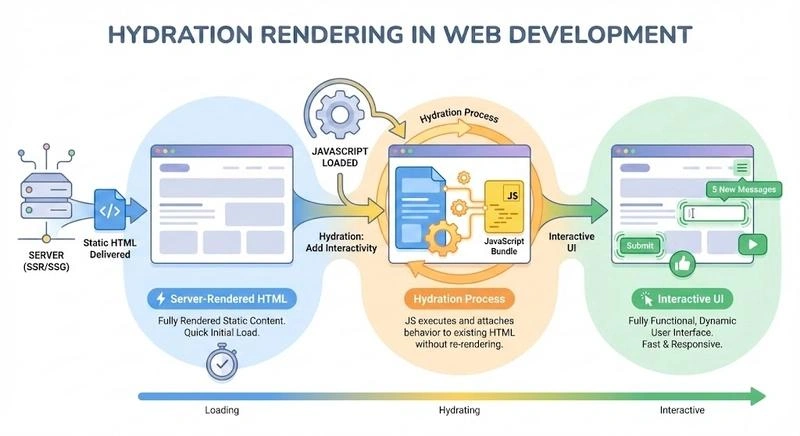
Hydration is the process where JavaScript “activates” a server-rendered HTML page by attaching event listeners and making it fully interactive.
Initially, users see the rendered page immediately, and once JavaScript loads, buttons, forms, animations, and other interactive elements become functional.
Benefits
- Faster perceived loading
- Better user experience
- SEO-friendly
- Smooth interaction
- Improved performance
Popular frameworks such as React, Next.js, Vue, and Nuxt use hydration extensively.
Dynamic Rendering
What is Dynamic Rendering on Rendering Architectures?
Dynamic Rendering serves different versions of a page depending on the visitor.
- Human users receive a JavaScript-rich interactive page.
- Search engine crawlers receive a pre-rendered HTML version.
Although modern search engines handle JavaScript better than before, Dynamic Rendering can still be beneficial for complex applications with heavy client-side rendering.
Suitable For
- Large enterprise websites
- JavaScript-heavy applications
- Legacy SPAs
- Websites with crawler compatibility challenges
Comparing SSR, SSG, Hydration, and Dynamic Rendering
| Architecture | SEO | Speed | Server Load | Best For |
|---|---|---|---|---|
| SSR | Excellent | Fast | High | Dynamic websites |
| SSG | Excellent | Very Fast | Very Low | Blogs, documentation, educational websites |
| Hydration | Excellent | Fast | Medium | Interactive React applications |
| Dynamic Rendering | Good | Medium | Medium | Large JavaScript applications |
Popular Frameworks Supporting These Architectures
Several modern frameworks simplify implementation:
- Next.js
- Nuxt.js
- Angular Universal
- Astro
- Gatsby
- Remix
- SvelteKit
These frameworks allow developers to combine multiple rendering techniques within the same application.
Best Practices for Choosing a Rendering Strategy
When deciding which rendering architecture to use, consider:
- Nature of the content
- Frequency of updates
- SEO requirements
- Traffic volume
- Server resources
- User interaction level
- Development complexity
A hybrid approach often provides the best balance between performance and flexibility.
Career Opportunities
Knowledge of Rendering Architectures: SSR, SSG, Hydration & Dynamic Rendering is highly valued in the software industry.
Career paths include:
- Front-End Developer
- Full Stack Developer
- Software Engineer
- React Developer
- Next.js Developer
- Technical SEO Engineer
- Cloud Application Developer
- UI Engineer
Companies increasingly seek developers who understand both performance optimization and search engine visibility.
Learning Modern Rendering at Ideal Institute of Engineering (IIE Kalyani)
Students at Ideal Institute of Engineering (IIE Kalyani) gain exposure to modern web technologies through courses in Web Development, Software Engineering, Cloud Computing, and Full Stack Development. By learning rendering architectures alongside HTML5, CSS3, JavaScript, React, Node.js, and database systems, students build industry-ready skills that prepare them for careers in software development and digital innovation.
Hands-on projects, coding assignments, and real-world application development help students understand how rendering strategies improve both website performance and user experience.
Conclusion
Rendering Architectures: SSR, SSG, Hydration & Dynamic Rendering form the foundation of modern web application development. Selecting the right rendering strategy improves website speed, enhances SEO, strengthens Core Web Vitals, and delivers a seamless experience across devices.
As businesses increasingly demand high-performance web applications, developers with expertise in these rendering techniques will continue to be in high demand. Engineering students who master these concepts today will be better prepared for tomorrow’s web technologies.